Anna Maria Bulgakova, UKCP Accredited Psychotherapist

Anna Maria Bulgakova


Shortlist Share
Anna Maria Bulgakova, UKCP Accredited Psychotherapist

Anna Maria Bulgakova

Shortlist Share

My Approach

My Approach
I offer warm, steady, relational psychotherapy — the kind of therapy that aims to support you not just through a difficult period, but toward greater peace, clarity and joy over time. I work with both mind and body, rather than treating them as separate systems, drawing on developmental theory, phenomenology and neuroscience as my theoretical base. I hold this lightly rather than rigidly, bringing in additional trainings — including EMDR and EFT — where they're genuinely useful, so the work fits you rather than fitting you into a fixed model.
Much of my work is with people whose lives don't sit neatly inside standard therapy structures. That includes clients in the arts, music and other creative or high-visibility fields, whose schedules are often irregular, demanding or built around touring, performance and travel rather than a predictable working week. I understand this pattern of life well, both clinically and personally, and I structure my practice around it — offering flexibility in scheduling, a mix of in-person and online sessions, and the ability to pick work back up after a gap without losing continuity or momentum. The same flexibility serves anyone juggling unpredictable responsibilities, not only those in creative careers.
I work with people managing anxiety, depression, stress and burnout, trauma and PTSD, relationship difficulties, neurodivergence including ADHD and autism, and significant life transitions. Many of the people I see are outwardly capable and high-functioning, but privately carrying a great deal — often after years of coping, supporting others, or operating under sustained pressure without much space to process it themselves.
Above all, I aim to offer continuity and depth: a steady, confidential relationship in which you're met as a whole person, not reduced to the issue that brought you to therapy. The goal is not simply symptom relief, but real and lasting growth, resilience and — where possible — joy.

About Me

About Me
I'm an Integrative Psychotherapist (MSc) with a background spanning mental health nursing, social work and psychotherapy, alongside many years in private practice. I work with adults and couples living with complexity — often people who are outwardly capable but privately carrying a great deal, after years of coping, supporting others, or functioning under sustained pressure.
I've spent decades of my own life close to the music industry — both as family and as a business partner in a music company — living, in effect, a parallel professional life alongside my career in mental health. I understand its pressures and its particular rhythms, not just professionally but from having lived it myself. This gives me a particular understanding of clients working in music, the arts, sport or other high-visibility careers, alongside my broader clinical work with people managing the everyday pressures of work, family and life.
I am also a trustee of a national charity working with people affected by prescription drug dependence and harm — a role that keeps me closely engaged with the realities of medication-related dependency, alongside my clinical experience of substance use more broadly.
My work draws on humanistic, relational and developmental theory, alongside neuroscience and body-based approaches including EMDR and EFT, and is particularly suited to people whose lives don't fit neatly into standard therapy models — including those living with anxiety, depression, trauma, addiction, or neurodivergence such as ADHD and autism.
I have a special interest in intergenerational trauma and how it shapes our sense of self and our relationships, often unconsciously.
I'm based in Frome, Somerset, offering in-person sessions across Frome, Bath, Wiltshire and Dorset, and online work across the UK and internationally.

I work with

  • Companies
  • Couples
  • Families
  • Groups
  • Individuals
  • Private healthcare referrals

Special Interests

Like all UKCP registered psychotherapists and psychotherapeutic counsellors I can work with a wide range of issues, but here are some areas in which I have a special interest or additional experience.

Special Interest: ADHD and Neurodivergence I have a special interest in ADHD, autism and neurodivergence more broadly, particularly in adults who are diagnosed later in life or who have never been formally assessed, having spent years — often decades — masking, compensating, or being misread by others and by themselves. Many arrive at therapy having been told they are anxious, difficult, disorganised or "too much," when the underlying picture is a nervous system and way of processing the world that was never properly understood or supported. A key part of my work is recognising how trauma so often develops alongside neurodivergence, rather than as something separate from it. Years of masking, misunderstanding, criticism, exclusion or rejection — at school, at work, in relationships and within families — can create a genuine trauma response, layered on top of the neurodivergence itself. Late or missed diagnosis frequently compounds this, leaving people carrying shame, self-doubt and a fractured sense of identity long before anyone names what was actually going on. My approach brings together neurodevelopmental understanding with trauma-informed, body-based work, including EMDR, to address both strands together rather than in isolation. The aim is not to "fix" neurodivergence, but to help separate out what belongs to a different way of being wired from what belongs to trauma and adaptation — so that both can be met with the understanding, structure and support they need.
Special Interest: Autism and Late Diagnosis, including AuDHD I have a special interest in autism in adults, particularly those who are diagnosed later in life or who strongly suspect they are autistic but have never been formally assessed. Autism is still frequently missed or misread in adulthood — especially in people who have learned to mask effectively, or whose presentation doesn't fit narrower or outdated stereotypes of what autism "looks like." Late diagnosis, or the absence of one, often carries a significant psychological impact. Many people have spent years, sometimes a lifetime, sensing they were different without having the language for it — attributing their exhaustion, sensory overwhelm, social difficulty or need for structure to personal failing rather than neurology. By the time a diagnosis (or self-recognition) arrives, it's common to be carrying layers of burnout, shame, grief for lost time, and a shaken sense of identity, alongside relief at finally having an explanation. I also work with the specific complexity of AuDHD — the co-occurrence of autism and ADHD — where the two profiles can pull in different directions at once: a need for routine and predictability alongside a pull toward novelty and stimulation; sensory sensitivity alongside impulsivity; a wish for control alongside difficulty sustaining it. This internal contradiction is often exhausting to live with and easily misunderstood by others, including by clinicians unfamiliar with how the two presentations interact. My work supports people to understand their own neurology clearly, make sense of their history in light of it, and address the masking, burnout and trauma that frequently accompany late diagnosis — creating space to relate to themselves with far more accuracy and far less self-criticism
Special Interest: Couples I have a special interest in working with couples across the full span of a relationship's life — not only when things have broken down, but at the point of building something together, and where needed, at the point of ending well. For couples further into a relationship, much of my work addresses strain caused by trauma, neurodivergence, addiction, or the pressures of demanding, high-visibility or unpredictable working lives. Long-term relationships often carry patterns formed long before the couple met — in family history, past relationships and early survival strategies — and my work helps couples see these patterns clearly, rather than simply managing the symptoms they produce. I draw on both Emotionally Focused Therapy (EFT) and the Gottman Method alongside my wider integrative and developmental training — using EFT to work with the emotional cycles that keep couples stuck (pursuit and withdrawal, conflict and shutdown, closeness and disconnection), and Gottman's research-based approach to strengthen friendship, manage conflict constructively, and rebuild trust and repair after ruptures. Where one or both partners are neurodivergent, I bring a neuro-affirming understanding of how differences in communication, sensory needs and processing style can be misread as disinterest or conflict, when they are in fact differences in wiring. I also work with couples in the earlier stages of building a life together — merging households, finances, parenting approaches, extended family and differing histories into a shared future. This is often where unspoken expectations and old patterns first surface, and addressing them early can prevent the same difficulties from hardening later on. Where a relationship is ending, my focus shifts to helping both people separate with as much safety, dignity and clarity as possible — particularly where children are involved. This includes work on co-parenting: separating the end of the couple relationship from the ongoing parenting relationship, managing conflict so it doesn't pass through to children, and establishing workable, respectful arrangements for the future. The aim throughout is not to assign blame or decide who is "right," but to help both people understand what is really happening between them, and move forward — together or apart — with as much safety, honesty and care as possible.
Special Interest: Post-Traumatic Stress I have a special interest in post-traumatic stress and complex PTSD, built on decades of experience working with trauma-related illness within the NHS, alongside specialist training in trauma across a wide range of contexts. This includes understanding where trauma originates and how it takes hold — whether through a single overwhelming event or through prolonged and repeated experiences over years. My work covers trauma arising from childhood abuse and neglect, domestic violence, sexual abuse, physical abuse, emotional and psychological abuse, coercive control, institutional abuse, and elder abuse, as well as trauma linked to accidents, medical experiences, and other life-threatening or overwhelming events. I understand trauma as something held not only in memory, but in the nervous system and the body. My approach draws on trauma-informed and body-based methods, including EMDR, to help process experiences that talking alone often cannot fully reach — supporting a shift from a state of chronic alertness, shutdown or dissociation toward greater safety, regulation and trust, both in oneself and in relationships with others.
Clinical Supervision Supervision has been central to my working life for most of my career. My first formal qualification was in management supervision for health and social care professionals, gained while leading a multidisciplinary team in Social Services, and I have supervised and led teams ever since. Over that time I have supervised practitioners across almost the full range of clinical and helping professions — consultant psychiatrists, doctors and psychologists, nurses, occupational therapists and social workers, and more recently psychotherapists and counsellors — making me equally at home with senior, multidisciplinary clinicians and those earlier in their careers. My supervision is warm and supportive: a space to think clearly and honestly about the work itself, how you're managing your practice, and the challenges that inevitably arise, so you come away clearer and more resourced for the work ahead. I draw on a broad base spanning integrative psychotherapy, trauma, EMDR and EFT, nursing and social work, and a background across mental health, child protection and complex care — which lets me work with a wide range of clinical material and bring fresh perspectives to whatever is raised. I offer both ongoing individual supervision, focused on professional growth, building a sustainable practice, and caring for yourself in work that asks a great deal of you, and supervision groups running from September to June, both online and in person. I warmly welcome enquiries, whether for individual supervision or to set up a group with colleagues.

Types of Therapies Offered

  • Integrative Psychotherapist

What I can help with

  • Abuse
  • Addiction
  • ADHD
  • Adoption
  • Age-related Issues
  • AIDS/HIV
  • Anger Management
  • Anorexia
  • Anxiety
  • Autism
  • Bereavement
  • Bulimia
  • Bullying
  • Cancer
  • Chronic Illness
  • Cultural Issues
  • Depression
  • Disability
  • Domestic Violence
  • Employment Difficulties
  • Gender
  • Health-related Issues
  • Identity Problems
  • Infertility
  • Mental Health Issues
  • Obsessions
  • Obsessive Compulsive Disorder
  • Online Counselling
  • Parents
  • Post-Traumatic Stress
  • Private Practice Issues
  • Race Issues
  • Relationships
  • Sex Offenders
  • Sex Problems
  • Sexual Abuse
  • Sexuality
  • Stress
  • Suicide
  • Telephone Counselling
  • Terminal Illness
  • Those at Risk of Sexually Offending
  • Transgender
  • Trauma
  • Workplace Counselling

Types of sessions

  • Face to Face - Long Term
  • Face to Face - Short Term
  • Home Visits
  • Online Therapy

UKCP College

  • Humanistic and Integrative Psychotherapy College (HIPC)
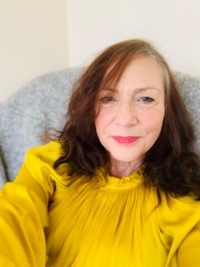
Anna Maria Bulgakova

Anna Maria Bulgakova

Bookmarks My Shortlist

All shortlisted profiles

Find a therapist near you